
by Imke Albrecht
The new children’s hospital in Zurich has been open for more than half a year now. But I myself only visited it recently as part of a midwifery training program in person there.
For the first time.
And I was moved.
My First Visit to the Children’s Hospital
I don’t mean the cool, round research building. I was actually at the hospital—the kind of hospital that parents and children get to know when they’re sick or have an accident.
As a midwife, I know nothing about architecture and don’t want to write architectural criticism. That’s not my place. Nor do I want to go on and on about spiraling costs, financing difficulties, or possible criticism of “star architects.”
I want to talk about how this visit affected me.
I feel architecture. Just like everyone else. And I can sense that something truly wonderful has been achieved here.
Our Experience with the Old Kispi
As the mother of a boy myself, I have been a patient—or rather, a family member—at the old Kispi over the past 17 years, during which time he has had numerous biking and snowboarding accidents and a few more serious illnesses.
I am always grateful for the excellent medical care and the compassionate, humane treatment.
Healing people. It all comes down to people—their expertise and, just as much, their humanity.
As a midwife, I know this all too well. And as a midwife, I spent most of my time working in delivery rooms in buildings from the 1970s.
When you ask my son about his memories of his stays at Kispi, what seems to stand out most is the inner conflict of never being able to decide between chocolate and strawberry anesthesia. Next comes a botched stitch removal. He doesn’t mention the architecture of the old Kispi.
I, on the other hand, remember the building. It was cramped and old, but they’d gone to some effort to make it child-friendly nonetheless. I remember nights spent next to my son on a cot in a room with too many children and too many caregivers. One night, I fled to the balcony with my folding bed. At least the view of the city and the lake was spectacular.
The Architecture
My visit to the new Kispi exceeded my expectations.
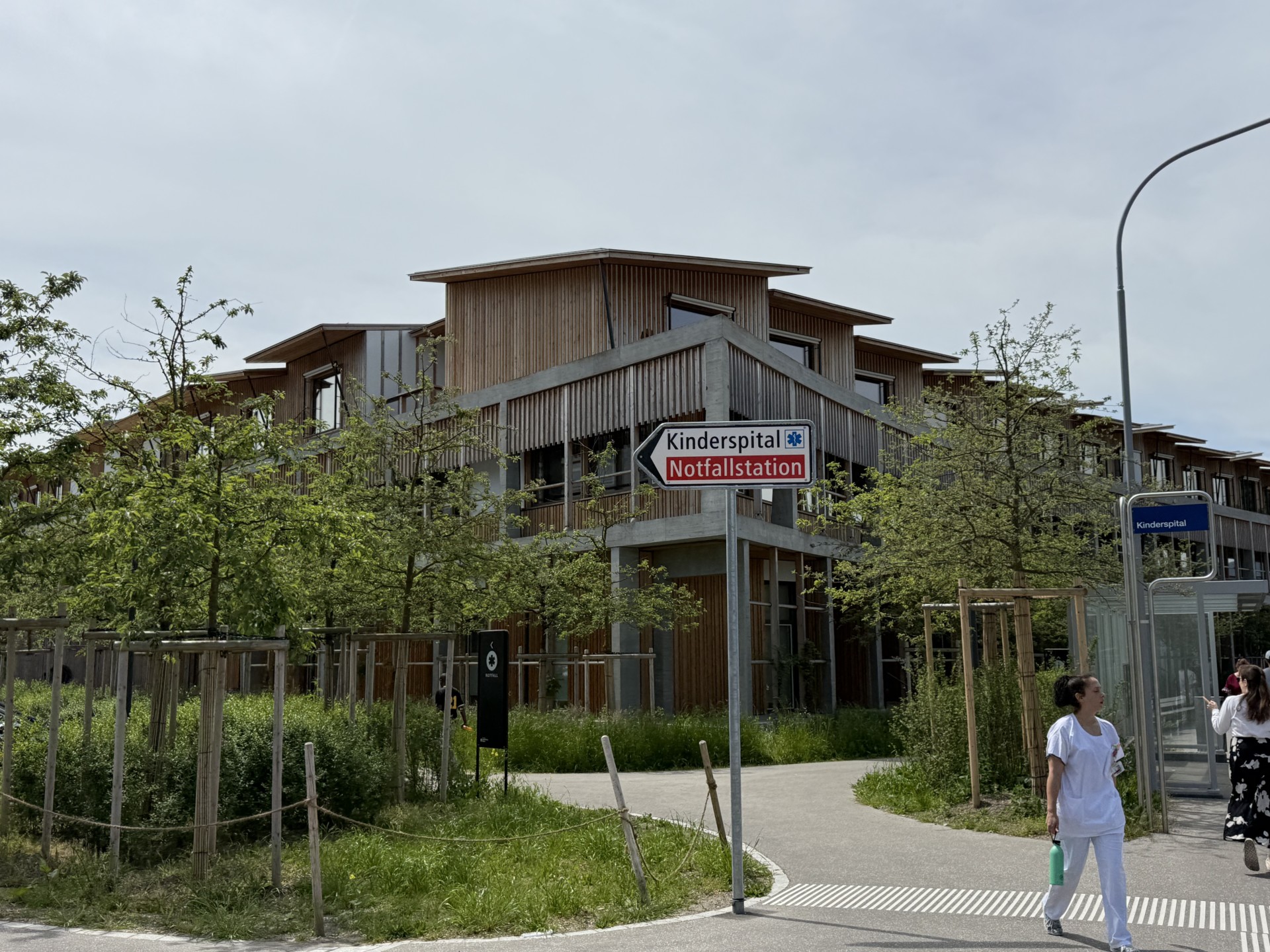
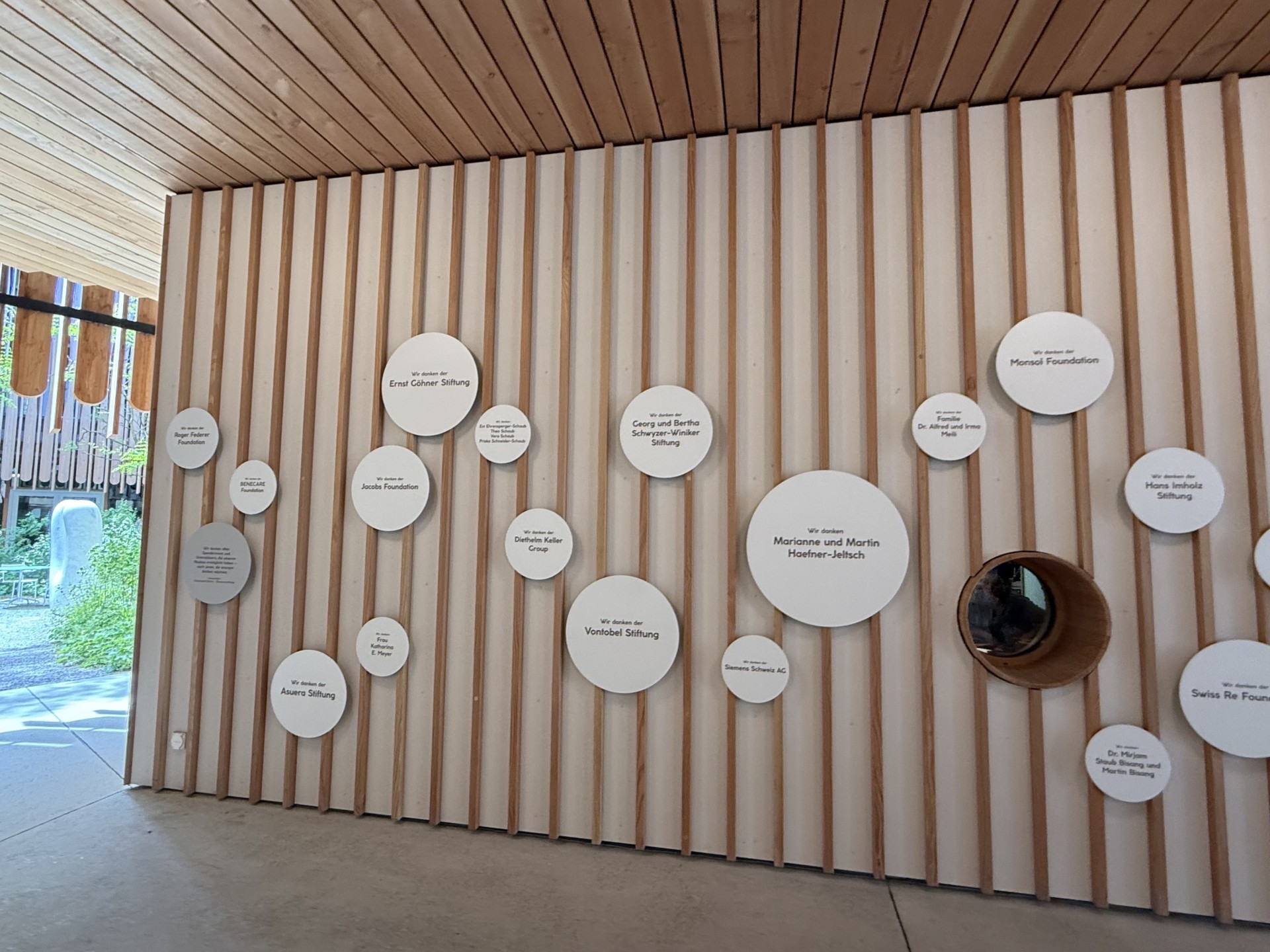
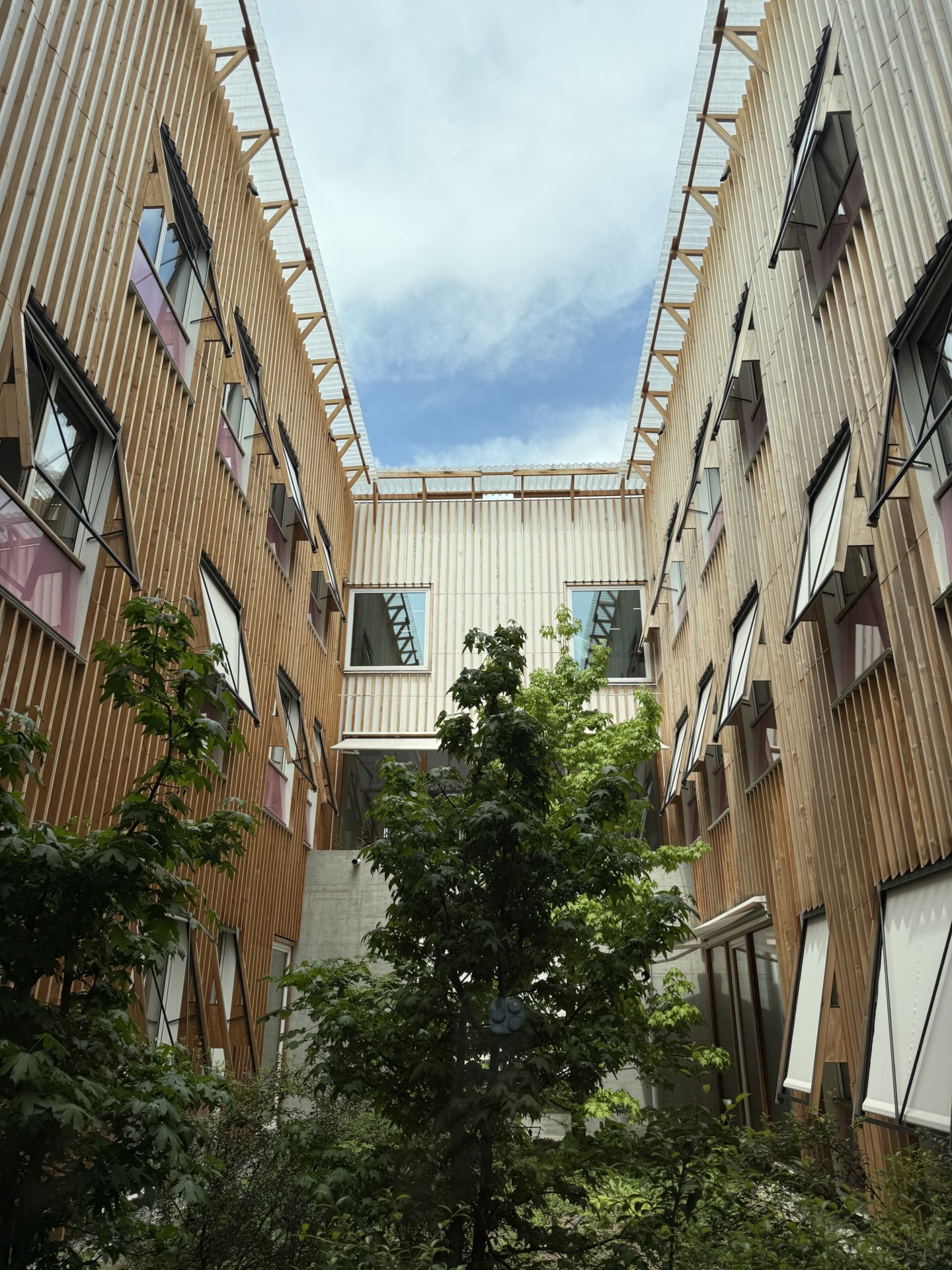
From the outside, the low-rise wooden building with its sloping roofs resembles a vacation village. There is nothing imposing, menacing, or intimidating about it—nothing sterile.
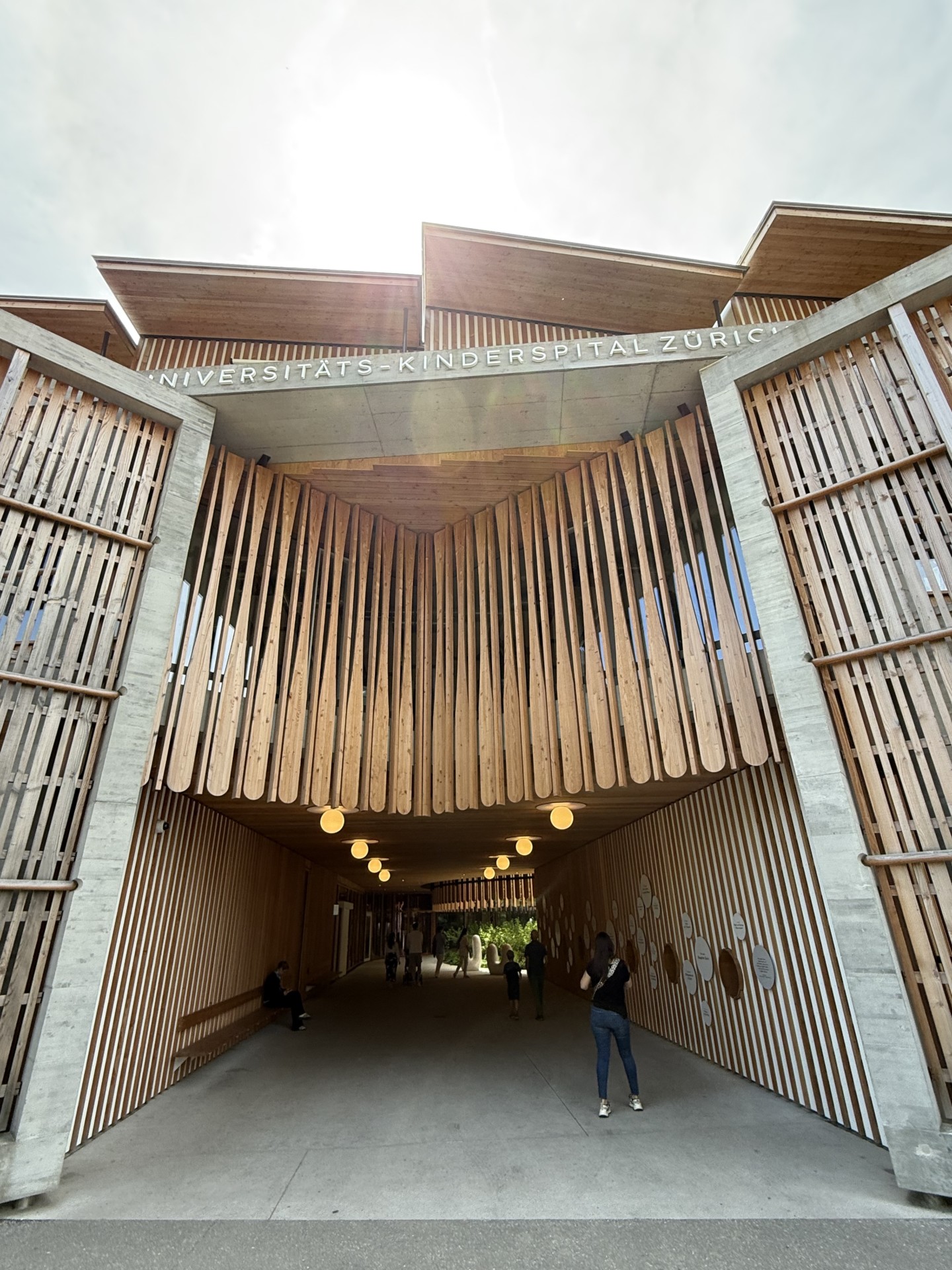
The entrance area is welcoming, and the large gates look as if you could close them just like the gates of a castle in a children’s book.
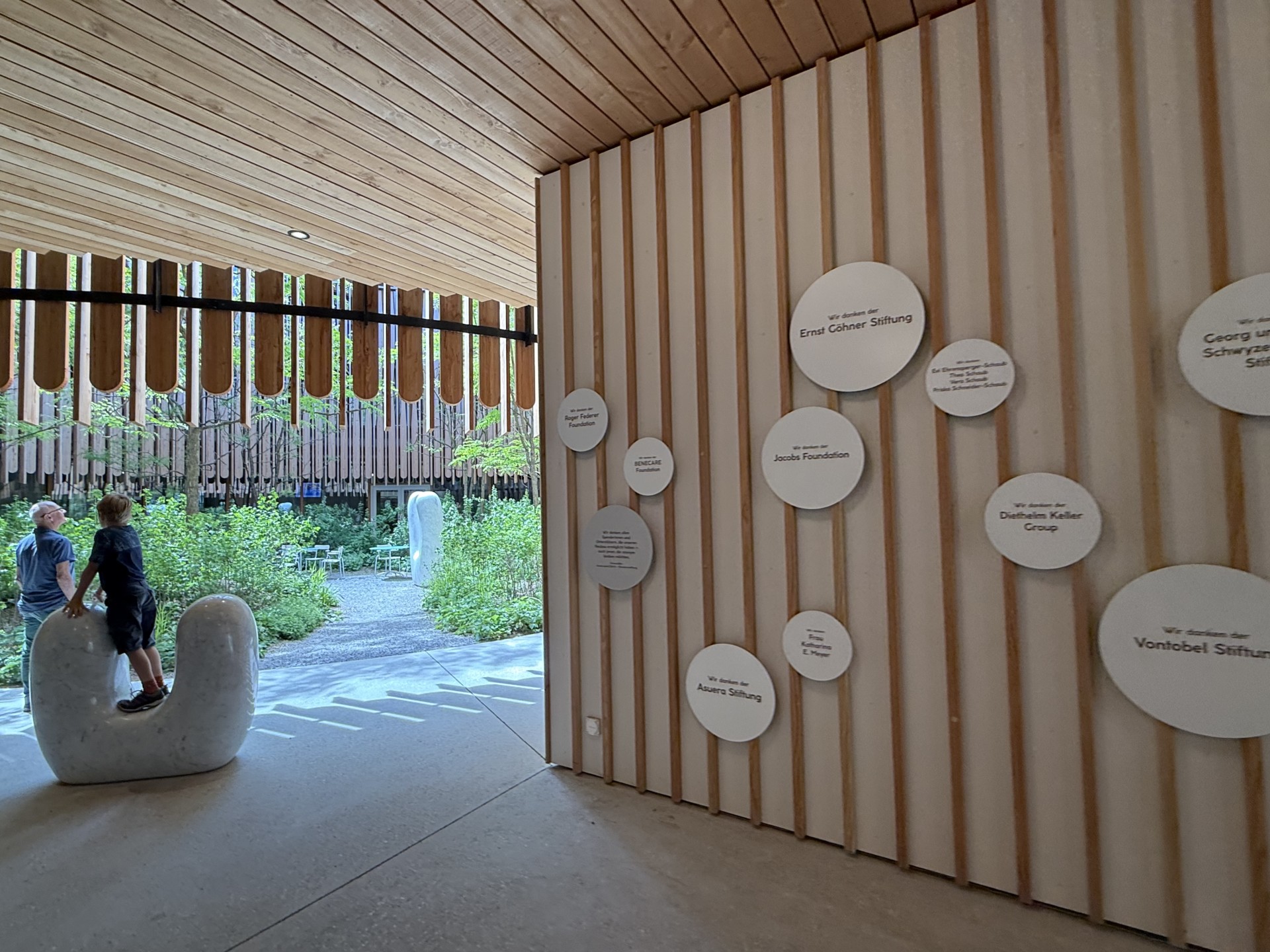
The courtyard in front of the entrance is beautiful and A little wild. The marble rabbit-ear sculptures are cute.
Then you’re inside. And I think it’s great. The atmosphere is modern without being clinical. Friendly without being childish. The mix of materials—wood, concrete, and glass—is simply beautiful. Warm.
The rooms are high and spacious; you feel neither lost nor overwhelmed. Instead, you feel safe, welcome, and immediately in good hands. I look around, get my bearings, and immediately see things that pique my curiosity and that I want to take a closer look at.
Art at the Children’s Hospital
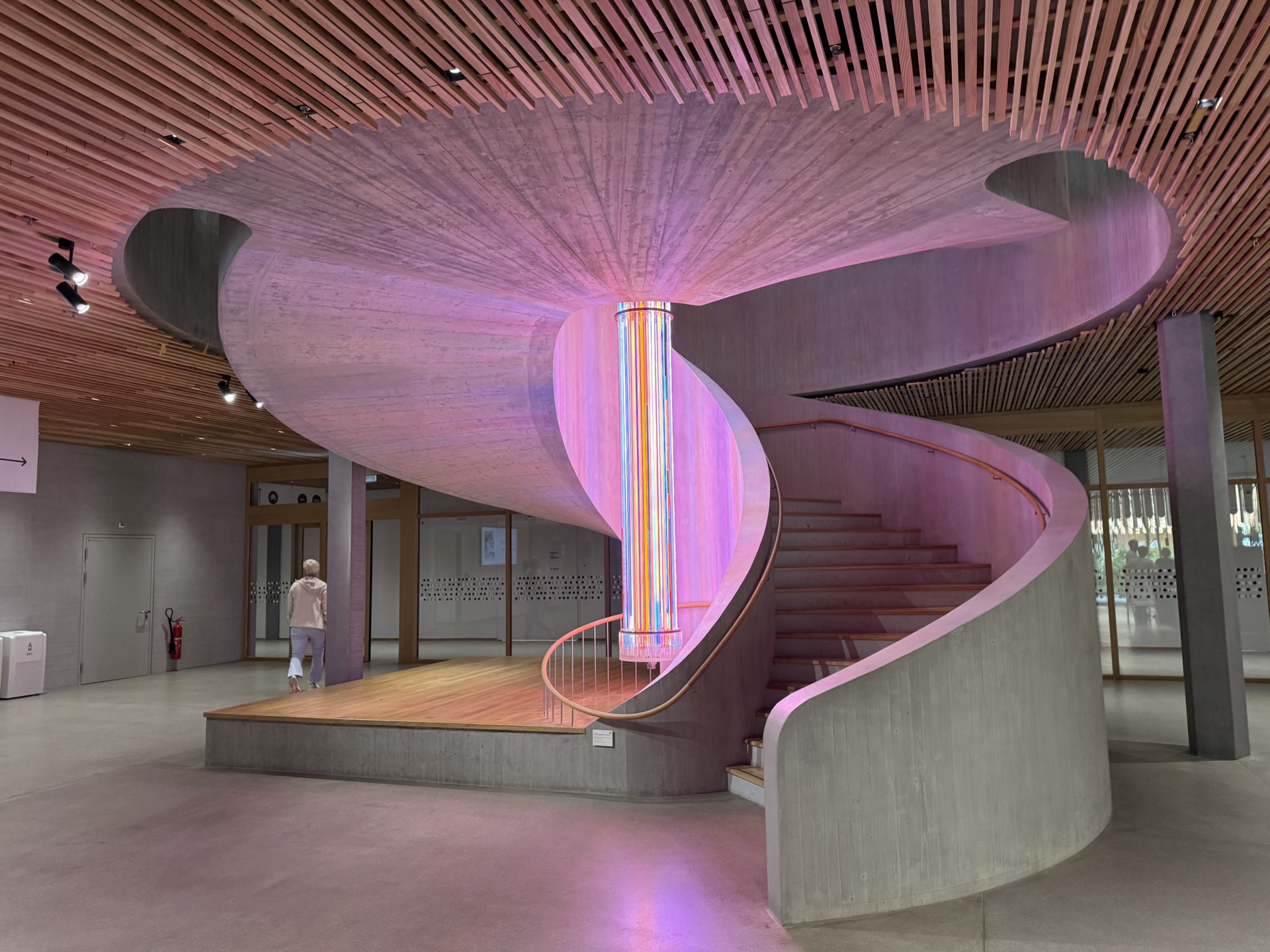
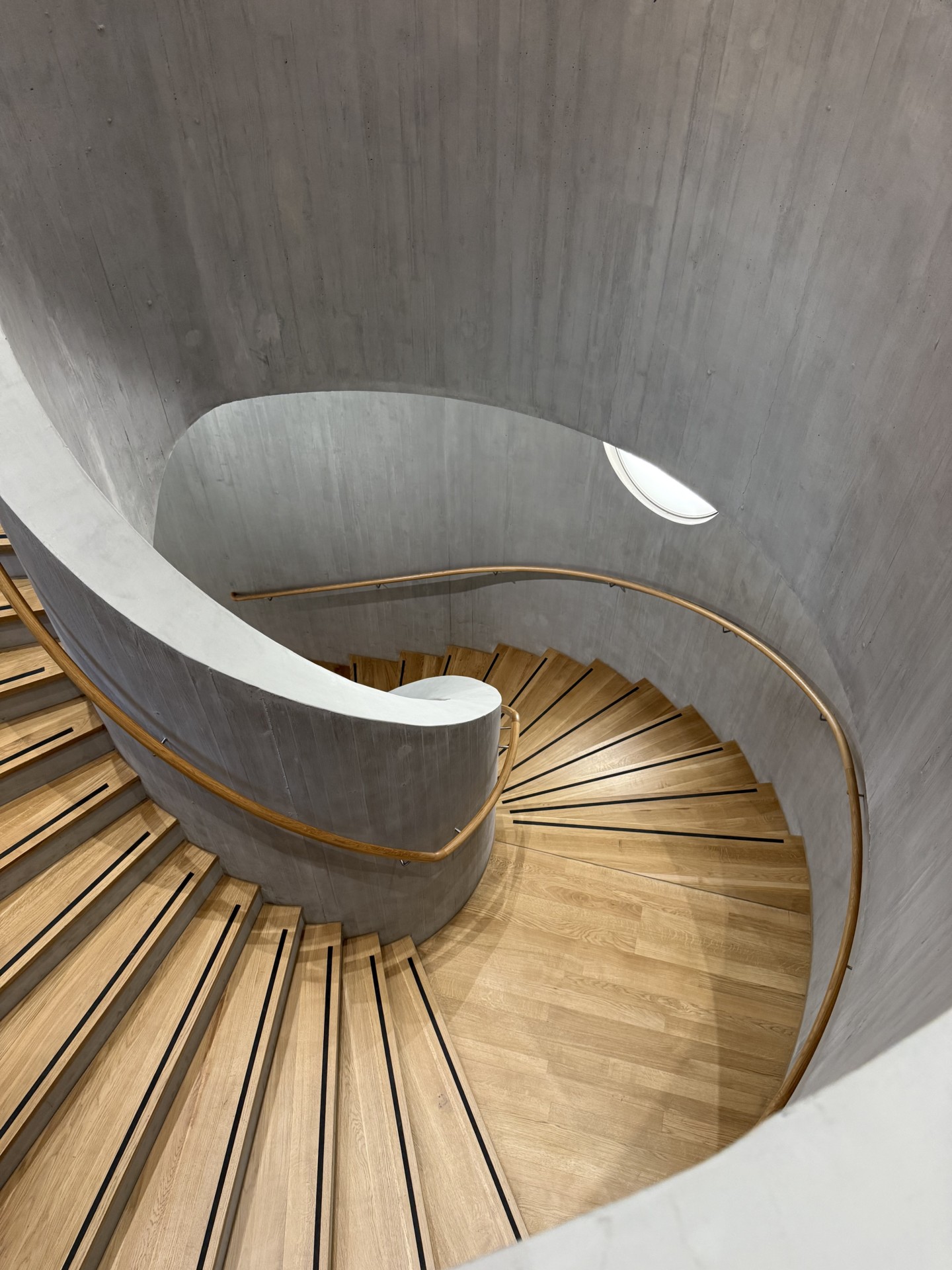
How beautiful stairs can be!
The light installation in the stairwell catches my eye and draws me in.
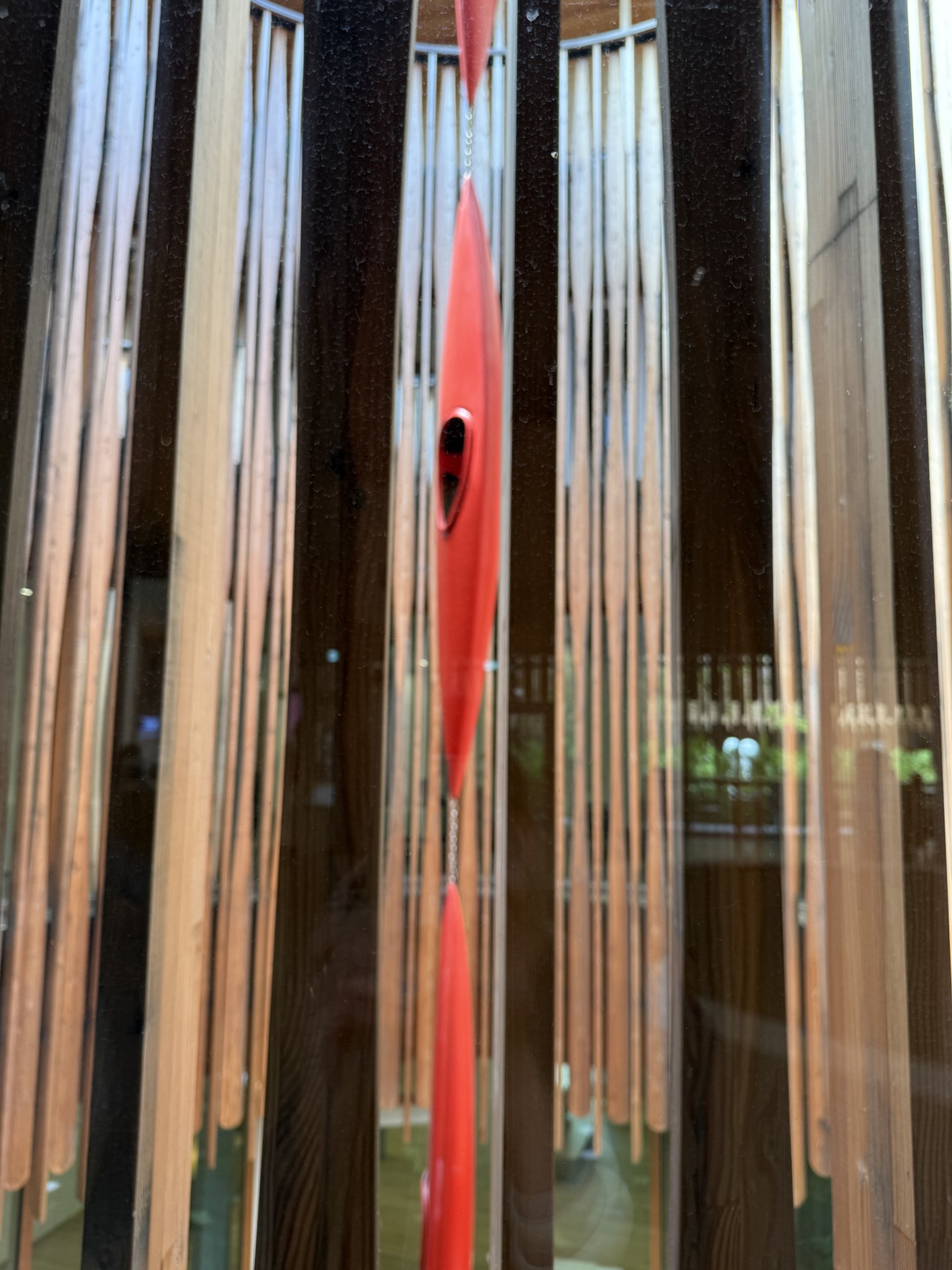
It’s a hospital. No doubt about it. And not a museum or a playground. But these art installations The ones by Roman Signer are great. You want to look at the red kayaks that seem to be hanging from the sky in one of the courtyards, visible through the wooden slats. I can imagine parents discussing this with their children. Why are there kayaks hanging there…? That might distract a little from the rather unpleasant reason why you’re there or why you have to keep coming back.
It makes you curious to walk down the long hallway and look at the variously designed courtyards, which the patients’ rooms on the upper floors apparently overlook.
I kind of have the feeling a Christmas tree is about to fly out of a window. It has a friendly Nordic vibe.
There are beautiful details everywhere. I didn’t see nearly everything, and after my visit, I was amazed to read on the website just how extensive the range of medical services is. It makes it all the more impressive and astonishing that it doesn’t feel overwhelming at all.
I want to share how I feel
I take a few photos and upload them to my chat groups for my prenatal yoga, postnatal recovery, and childbirth preparation classes. I want “my families”—the ones I care for as a midwife—to experience the same feeling I’m having right now.
I want to let them know that they’re in good hands.
The first stop for expectant parents is the city’s maternity hospitals. I was part of this healthcare system for 10 years in the old Triemli delivery room.
All parents will, sooner or—hopefully—later, be with their children, and then Hopefully, I’ll end up at the children’s hospital with nothing worse than a broken arm.
As “first-time parents,” this might seem scary. In my childbirth classes and in my work in general, I always try to prepare people for reality. Anything is possible, and anything can happen: C-sections, vacuum-assisted deliveries. And later in life, with the children, there can also be illnesses or accidents. That’s just the way it is—it’s part of life. But we’re privileged. We have this network of institutions for us and our children. And this network is so good and comprehensive—it catches us and supports us in a way that, unfortunately, isn’t the case everywhere in the world.
The architecture at the children’s hospital embodies all of this: it eases fears, makes difficult things easier, provides a distraction, brings laughter, and yet takes things seriously. And it helps with healing.
Enthusiasm and Gratitude
I was thrilled after my visit. And deeply moved, because I felt a strong sense of gratitude—for medicine, but also for being able to live in a system that has the resources to make such architecture possible, architecture that can be part of one’s way of life.
My son and we, as his parents, will not live to see the new Kispi. On his last visit in February 2024, he was—frustratingly—already taller and stronger than most of the nurses and doctors. Just the other day, he underwent surgery at the USZ. At the USZ, with its aging architecture. Once again, what remains are competence and humanity. It is people who heal.
But architecture helps with healing.
My courses


Similar posts

Premature babies aren’t exactly given coffee, but they are given caffeine citrate intravenously to stimulate their still-immature respiratory center and minimize the dreaded breathing pauses as much as possible. So drinking coffee during pregnancy and while breastfeeding is totally fine, as long as you stick to normal amounts. But what is considered a normal amount

As a midwife and lactation consultant in the postpartum period, I see a lot of parents who overshoot the mark in their desire to do everything perfectly. Or simply can’t see the wood for the trees because of all the controversial answers. The topic of “sterilization” is a small example where I often think that

For some years now, it has been recommended that expectant parents have themselves vaccinated against pertussis during pregnancy. As a midwife, I am often asked in my antenatal classes whether I recommend the pertussis vaccination or not. What is pertussis? Pertussis is the technical term for whooping cough. I myself have never experienced this disease
